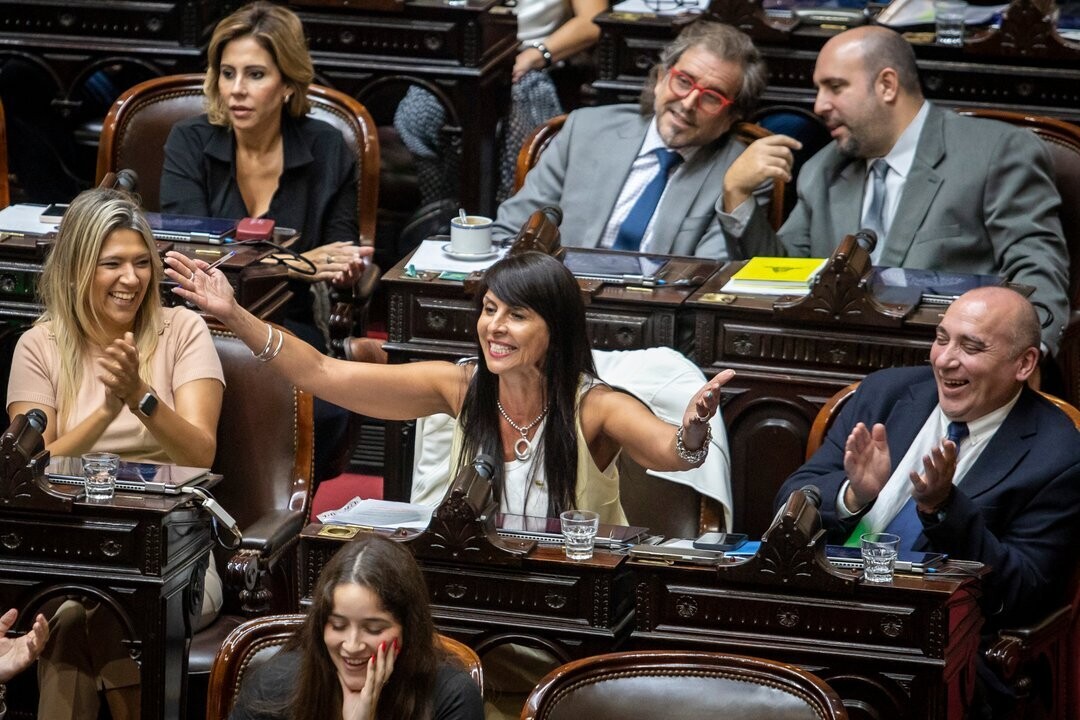
Buenos Aires, December 10, 2025 (NA) – The curtain closes on the legislative year with a poor performance, the worst of the last decade: 22 sessions, of which 11 were special, 11 laws passed, 20 committee motions, 7 executive vetoes, and 5 rejected emergency decrees (DNUs). Lack of consensus and the intensive use of control tools by the opposition characterized the opaque period, where the ruling party did not have enough weight or negotiation capacity to impose its agenda, evaluated the Noticias Argentinas agency based on the legislative balance report by DL.
The fact that 11 out of 22 sessions were special evidences the difficulties political forces had in agreeing on topics to be addressed. Another characteristic of the year was the unprecedented use of committee motions. It went from a maximum of three in previous periods to 20 in 2025, a sign that the opposition sought to force the treatment of projects against a ruling party that avoided enabling debates.
The Laws Passed
Among the laws passed are three international agreements (pending Alberto Fernández's signature) and eight initiatives promoted by the opposition: the declaration of a state of emergency in Bahía Blanca, two pension increases, the Disability Emergency, the modification to the Nation's Treasury contributions to the provinces, the funding of national universities, the Pediatric Health Emergency, and the Nicolás Law. There were no ruling party projects that became law. Of the 11 approved laws, seven were vetoed by the Executive Branch. In three of those cases, Congress insisted and overturned the vetoes. In this dynamic, the Legislative Palace operated as an opposition territory, with intensive use of legislative tools to sustain its agenda and limit the ruling party.
The tension between both branches of government was also expressed in the control of emergency decrees: in 2025, five DNUs were rejected out of a total of 33. The ruling party's legislative strategy was conditioned by its numerical weakness.
The Challenge of Building Alliances
However, the new composition of Congress after the October elections opens a more favorable panorama for the Government, which could move from a defensive logic to a more proactive one if it manages to build the necessary alliances. La Libertad Avanza had very minority representation, and with the allies with which it won the runoff in 2023, for different reasons, it failed to temporarily align with them. This was the claim that international interlocutors, such as the IMF and later the Donald Trump government, made to Javier Milei to hinder the structural reforms that would order the country according to the agreed guidelines.
The new Parliament that emerged from the midterm election has a composition that will open new dialogue channels within Congress. The panorama of the chambers shows that the ruling bloc added a total of 64 seats in the Chamber of Deputies, consolidating itself as the second minority. Together with PRO and other spaces, it could count on a bloc of up to 93 seats, which would secure control of more than a third of Congress, the number necessary to sustain presidential vetoes.
The opposition led by Fuerza Patria obtained 30.02% of the vote and maintained 45 of the 46 seats at stake. Provincias Unidas, a provincial coalition that sought to establish itself as a third way, reached 5.8% of the vote and 7 seats, while the Frente de Izquierda will have 4 seats. In the Senate, where 8 provincial seats were at stake, La Libertad Avanza won in 6, increasing its representation from 6 to 19 senators. The opposition, led by Fuerza Patria, secured 22 seats, while other provincial forces obtained 4 seats.
No bloc reached its own majority of 37 seats, so dialogue with third spaces and governors will be key for governability.